
A New Perspective on Church Buildings and Ministry
Years ago, I had a client who was the marketing director of a prominent television ministry. Before working with us, he’d been involved in another major ministry. I remember discussing topics such as products, pricing, donation requests, upsells, and the financial aspects of the services we would provide to the ministry. He said something that stuck with me. He said, All of that will come in time. Right now, the leaders don’t want to focus on the money aspect. They never do. Then he said, “It’s never about the money, until it is.”
At the time, I didn’t fully understand the depth of that statement, but as the years went by, it became clear. Ministry often starts with a noble, mission-driven vision, but inevitably, money and resources become a major, if not primary focus.
A few years later, before I decided to step away from “Churchianity” completely, I met with a pastor who had just started a new church in the city where I had moved. I liked the laid-back vibe of the church and the lack of pretension. Honestly, I had hoped to be a part of it for a longer period than I was.
I’d visit with him almost weekly, and we’d have some great discussions about what church was and could be. He had been involved in church ministry for years but felt called to start something new—something different. I truly hoped that this would be something different.
I remember sharing how, in many churches, it seemed like everything funneled into the building and payroll. I pointed out that in most cases, a church’s funds were consumed by the costs of buildings and salaries—sometimes 90% or more. I told him that when I served as a pastor in Virginia, I often felt more like a property manager than a minister.
He reassured me, saying, “It’s not about the building. It’s not about following the traditional model. It’s about being the church in a more organic, meaningful way.”
I couldn’t help but paraphrase my old client’s words to me, “It’s never about the building, until it is.”
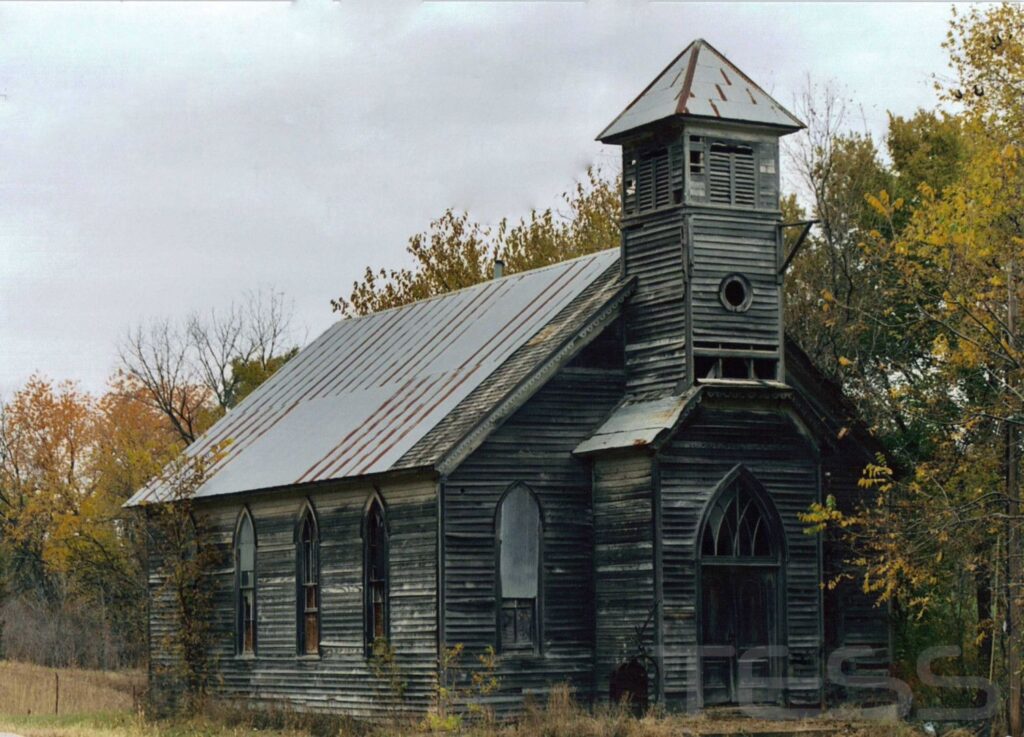
Over time, however, I watched from a distance as this hopeful new church turned into another traditional American-style church, complete with a sanctuary (yes, that’s what they call it), chairs in rows focused on a prominent podium from which the “Man-O-God” would dispense weekly opinions authoritatively as “truth.” There was now a formal service schedule, three songs, and a sermon—week after week. It became the same routine, just another iteration of “Church, American style.”
I get it—believers need a place to gather and worship if that’s how they choose to worship. But the question that kept nagging me was: Why are billions of dollars spent on church buildings each year when these spaces are often used less than 3% of the time? That seems like an incredible waste.
I grew up in the church. I was a PK (preacher’s kid), served on a church board into my 30s, worked with a missions ministry, traveled as a missionary/evangelist, and even spent 17 years as a pastor. What do all these years have in common? The building.
I watched my dad lead two congregations through building projects—church buildings that weren’t necessary because the old ones didn’t work, but because they needed something newer and “better.” The goal wasn’t to serve the community more effectively but to attract people away from other churches.
As a board member and treasurer, I was part of a church’s building project, too. We cut debt, saved money, and paid off loans to fund a new building. But after months of planning, a new building was constructed—and the results were not what we expected. Instead of growth, the church faced division and strife. Many people left, and the remaining members struggled just to make the mortgage payments. But at least we had a shiny, new building.
As a pastor, I was also bitten by the “new building” bug. Our church had a perfectly good facility, but it was outdated—1970s style. So, we remodeled. We knocked down walls, installed new carpet, new chairs, updated the lighting, added screens, and repainted. The building looked great. But after the fanfare of the dedication service, we still came, sat in the same chairs, and did the same thing every Sunday. No real change.
Here’s the thing: I don’t care if churches build grand buildings, remodel outdated rooms, or even fly hot air balloons over the steeple. That’s not my point. My question is: Does it matter to Jesus?
In the Gospels, Jesus gave what many call “The Great Commission.” Though he never called it that, the term stuck. Jesus said to his followers, “Go ye into all the world and declare the too-good-to-be-true news to the world.” But over time, churchianity turned this “Go ye” into a “Come ye.”
“Come ye to our church buildings,” we said. “Come ye and hear our great preacher. Come ye and sing our great songs, and see our fantastic facilities.” But Jesus’ commission was to go out, not to gather people in, especially to a building.
And where do we want people to come? Into our buildings—whether it’s a grand worship center, a storefront church, or a mall converted into a house of worship, or a traditional white boarded rectangle with a steeple. “Come” to our services, Sunday morning at 9 and 11.
Look, I know I probably sound disillusioned, but could it be that there’s more to what Jesus called us to do than just building buildings, creating fancy stage areas for sermons and singing, and trying to attract people to our church from another?
Conclusion: Rethinking What “Church” Really Means
I have spent countless hours inside church buildings over the course of my lifetime. I am grateful for those buildings. I’m glad that I was able to go to meetings inside a comfortable building, and didn’t have to sit on a hillside next to a lake, or stand out in the desert to hear someone preach. I mean, who would do that, right?
Today, churches often spend massive amounts of time and money on buildings, but is that what Jesus intended for us to prioritize? The truth is, the church isn’t a building; it’s the people. And the mission isn’t about bringing people to a location; it’s about going to them. Our focus shouldn’t be on creating comfortable, attractive spaces for people to sit and consume, but on spreading love, serving others, and being the hands and feet of Jesus wherever we go. Should we really spend all that money on buildings when there is a homeless person sitting on the bench in front of the church building?
It’s time to rethink what church really is. It’s not about the structures we build but the lives we touch.
