
For years, I have prayed for, studied, and preached about revival. When I became a pastor in the institutional church system, my sole desire was to bring revival to the church and transformation to the city where the church was located. Sadly, after 17 years, that was not the result.
After many years, God began showing me we needed a reformation, not a revival. At about the same time, I started hearing more recognized leaders worldwide say similar things: The church needs reformation.
At first, I didn’t understand this reformation idea. Honestly, I assumed it was just a revival with a different name. That was what I expected. (Churchianity is good at doing that.) I think that is what most believers in the institutional church setting believe. We just want revival.
The problem with revival is that it revives something that was once alive and brings it back to life. The problem, you say?
If there were problems with what was once alive, it may be better for it to stay dead. Some aspects of the church system do not need to be revived.
When a local church sees revival, a reawakening, a lot of the old stuff gets awakened. There is a new push toward some of the things of old. Instead of preaching the goodness of God, revival awakens old doctrines that probably shouldn’t have been alive in the first place.
Reformation is unwanted. It is welcome if we think it is just a new name for revival, but it is unwanted if reformation is true re-forming. It is change, and people often resist it. Just give that ole time religion.
If you take a Play-Doh ball and form it into a cup, that’s great. But if you then reform it, you smash it back into a ball and remake it into a saucer. It no longer resembles a cup, functions like a cup, or looks like a cup. That’s reformation.
And that reformation is what I believe Jesus desires for His Ekklesia – His Body on earth.
In the last few years, after stepping outside of the churchianity world, I realized that the reformation that Jesus desires for His Body is a total reformation. It’s not just a new coat of paint on the old walls or replacing pews with chairs. It’s a complete overhaul. It’s a major reconstruction. It’s change, and unfortunately, most people, especially in the churchianity system, do not like change.
Reformation is not just change for the sake of change—the church is great for that. In recent decades, the church system has undergone changes that have made it more similar to the world. It’s become trendy, or at least it has attempted to. It’s become cutting-edge, so they think. The problem is that it is the same church system, with a new coat of paint, possibly new lights, chairs, and a smoke machine.
This reformation is not just reforming into something new, but re-forming and returning to the original design that Jesus intended.
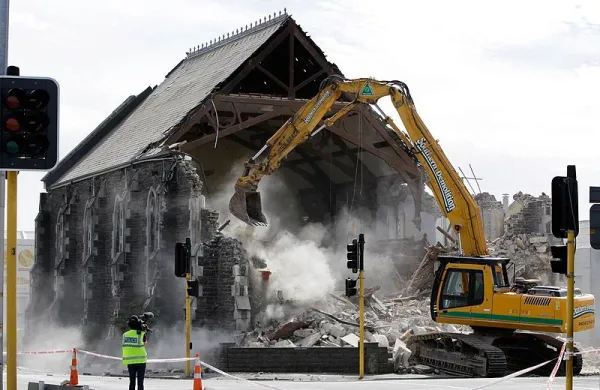
That doesn’t mean, at least in my current understanding, that we are supposed to go back to first-century gatherings. It doesn’t mean the gatherings must be held in homes, although we could meet there. It isn’t going back in history but reforming to align His Body with its original design.
In other words, Jesus doesn’t want a 40 AD Ekklesia. He wants a 2025 Ekklesia that follows the trajectory of His purpose over the last 2,000 years. It’s His Body in 2025 and beyond, for our modern world, but it’s shifted back into alignment as if we hadn’t lost the Creator’s original vision over the last 2,000 years.
That vision is with His Kingdom, not individual kingdoms. It was One Body, not tens of thousands of tiny bodies. It brought Heaven to Earth, not hoping we’d all die and go to heaven. It was walking in the authority of Jesus, not explaining away bad things as if God must have had a better plan.
I’ve been around revival fires all of my life. I love that atmosphere, but what I’ve realized is that nothing ever changes. There’s a new spark, new excitement, new ideas, but nothing ever changes.
A few weeks or days later, it’s the same ole same ole, church as usual.
Churchianity doesn’t want reform because it can’t control it. A revival can be somewhat controlled. Just look at recent outbreaks of revival. They were shut down because they didn’t fit into the formula of what man could control.
But a reformation removes the formula altogether. It eliminates man’s control over the situation. There are no pastors to control it, no bosses in charge, just Jesus and His Spirit.
What does this reformation look like exactly? I’m not sure, but I believe with all my heart that Jesus wants to return to the original intent, not to continue the same old man-made system of religious strangulation.
The Bible says that the Apostles, prophets, evangelists, and pastor-teachers should equip the saints (everyone else) to do the work of ministry. Their role is to equip, not to be the manager or boss.
I was a band director for many years. I equipped the students to perform, but I didn’t perform one sound. I was the instructor, but the students were the performers. There were many times, I, the director, could simply start the piece, walk off stage. Why? Because the students had been equipped properly to make the music.
Churchianity has reversed it. It’s said that teaching or preaching is the ministry, and everyone else is to be spectators. Instead of leaders being equippers of others, they are performers on the pedestals while the congregation observes the show.
I recall speaking with a person back in Virginia. He had asked if I knew a certain pastor in another church. I said I had heard his name but had never met him. The gentleman replied by saying, “He does a good job for us.”
I think that is what most people think. The pastor, or whatever title they go by, is the one doing the ministry. The rest of us just watch, and if the pastor gives a good sermon that week, then God is pleased and we get our scorecard checked off.
The reformation is to change that mindset—the mindset that going to church is all there is to it, the mindset that if you don’t attend a Sunday morning show, you’re going to hell, the mindset that we just need to get more information, and more information, and more information, and somehow that is ministry.
A true reforming of the Body of Christ, returning it to its original intent, will eliminate the church’s top-down authority structure. It will restore the One Body, with Jesus as its head. It will move it back to bringing the Kingdom to earth rather than promoting those who are on earth to die and go to heaven.
The scary thing about reformation is that what we know as a church will not look like what we now know it to be. It will be something different. It will be a family, not a business. Everyone will be working, not just a few appointed people. Unlike a fresh coat of paint, it won’t cover up the flaws, but the rot will be ripped out. Weak walls will be removed, rooms enlarged, changed, and repurposed—something remade anew again.
A reformation will make the body of Christ about His Kingdom. He will focus on winning nations, rather than counting the number of people who attend a weekend show or give a thumbs up to the 20-second highlight video.
For the last few years, I have asked God what this reformation looks like. After years of praying, seeking, and thinking, I have yet to come up with a clear picture. I think the reason for that is that it is His plan. I believe He will use us to accomplish it, but if He gave it to us in full, man would take it and make it into churchianty 2.0, and He is not interested in that.
I want reformation. I don’t know what that means, or what it will look like, but that’s okay. They sought a deliverer 2000 years ago, and He came in a way no one expected. Why should a reformation today be anything different?
